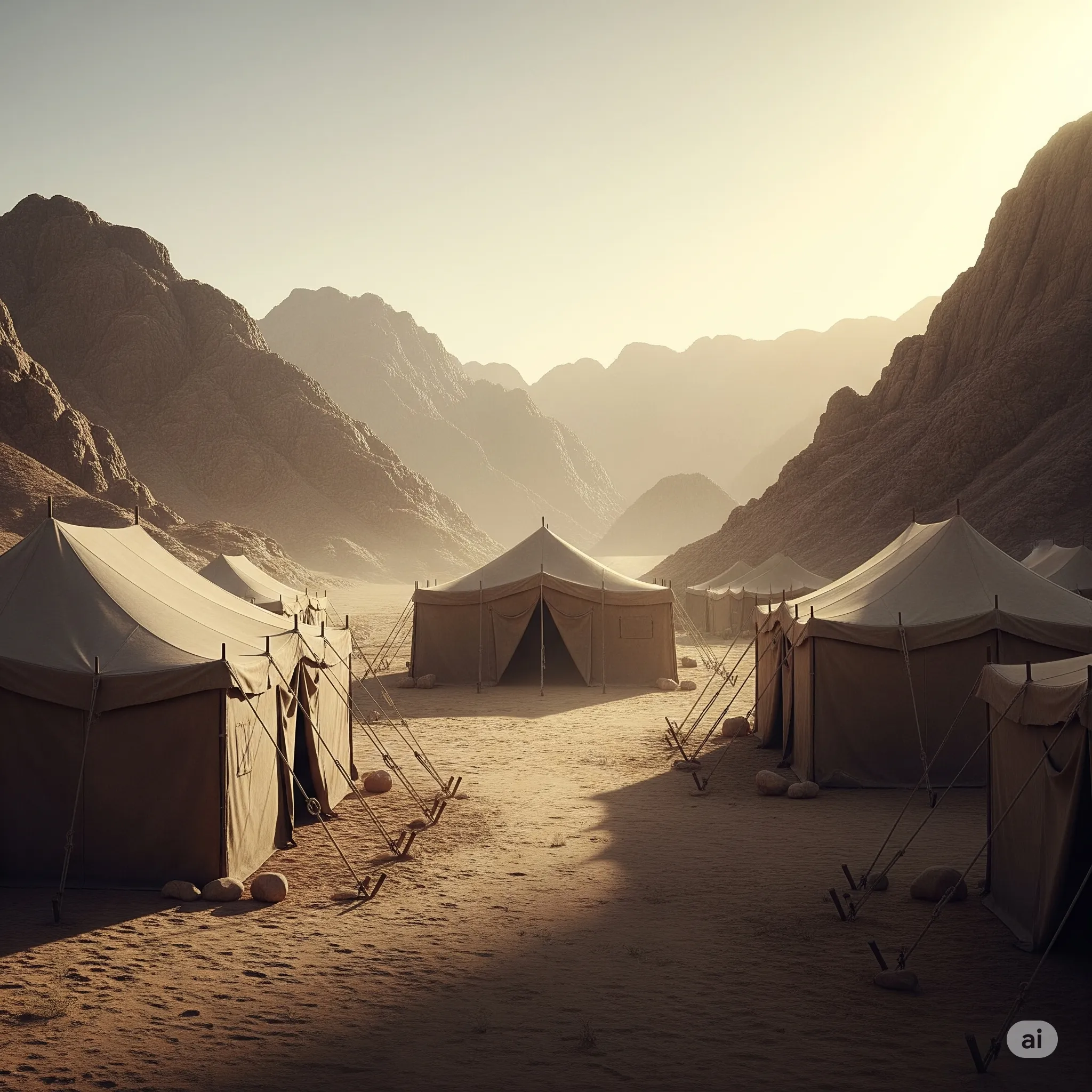
I woke up for Fajr to the sound of the Imam’s booming yet harmonious voice calling out the Adhan. The early morning air was crisp and cool, gently filling my room as I rose from my bed. After performing wudu, I made my way toward the masjid, the narrow streets illuminated by the soft glow of lanterns.
As I arrived at the masjid, a familiar voice greeted me. “Assalam u alaikum, Ilyas,” Sulieman said warmly.
“Walaikum assalam,” I replied, clasping his shoulder in greeting. “How are you?”
“I’m good, Alhamdulillah,” he said.
“And you?”
“Alhamdulillah, I’m well,” I answered, a smile pulling at my lips.
Suddenly, a figure approached us, his expression serious. “Ilyas,” he said breathlessly. “Ziyad ibn Ahmed is about five miles out of the Valley of the Falcon.”
“Thank you,” I replied, nodding. Without another word, he turned and hurried off. After praying Fajr, the dawn giving way to a warm, golden light, Sulieman and I mounted our horses. Their hooves clattered softly against the rocky path as we rode toward the river crossing. Mist hung in the air over the water, and the calls of distant birds echoed in the quiet morning.
When we reached the crossing, we saw Ziyad ibn Ahmed waiting. His tall figure stood firmly by the water, his armour glinting faintly in the soft light. Upon seeing us, Ziyad raised his hand. “Soldiers of Yousuf ibn Muhammed, come and meet us here!” We urged our horses into a canter, the rhythmic sound of hooves pounding against the earth as we approached. Dismounting, we greeted him. “Assalam u alaikum,” we said. “Walaikum assalam,” Ziyad replied, his piercing gaze scanning us.
“Where is Yousuf ibn Muhammed?”
I hesitated for a moment before speaking. “Abee is gone,” I said quietly. “He travelled to Seville to gather volunteers. Before he left, I had a dream that he wouldn’t return. I begged him to let me go with him, but he said I couldn’t. He told me that if he didn’t return within two months, we would have to assume he was dead, and his son would take control.”
Ziyad raised an eyebrow. “How long has it been?”
“It’s been three months,” I said sombrely.
“So his son has assumed control.” Ziyad’s eyes narrowed.
“Who is his son?” I stood tall, my shoulders squared as I met his gaze with quiet resolve. “I am his son.” After a brief silence, I added, “Let us discuss this at our base if that is fine with you.”
Ziyad nodded. “Lead the way.”
We rode swiftly back to the camp, the valley stretching before us. As we entered, the commander of the reserve division rushed to me with urgency in his eyes. “My lord,” he said quickly. “The Christians are preparing for an attack. We must prepare immediately.
That evening, under the flickering light of torches, I gathered my council. Ziyad, Sulieman, and the commanders all sat in a tight circle. “We will use the land Allah has blessed us with to our advantage,” I began, drawing from the Prophet Muhammad’s tactics at the Battle of the Trench. “We’ll dig trenches at the valley’s entrance to halt their advance and force them into narrow paths where their numbers will be useless.” The camp became a full of activity. People worked tirelessly, digging trenches and setting obstacles in place. Scouts were sent to monitor the enemy, and emissaries journeyed to neighboring tribes seeking reinforcements. Days later, the enemy forces appeared on the horizon. From my vantage point, I saw confusion spread across their ranks as they encountered the trench. Their soldiers hesitated, staring at the obstruction before them, unsure of how to proceed.
“Archers!” I commanded. The air was filled with the whistling sound of arrows as they rained down on the enemy. Cries of pain and confusion erupted from their ranks, and their formation began to falter. The frustration in their movements was evident. For days, we carried out hit-and-run tactics, wearing down their morale. When the time came, their forces attempted to charge, but we had anticipated this. The narrow paths we’d fortified forced them into tight formations, unable to maneuver.
“Charge!” I shouted. Our cavalry surged forward from all sides, surrounding their forces and cutting off their retreat. “Surrender, or we will have no choice but to kill you!” I shouted over the clamor.
“Never!” came the defiant reply.
“Allahu Akbar!” I cried, signalling my forces to charge. The clash of swords and shields rang in my ears as we fought fiercely. After about half an hour of intense combat, I saw a white flag emerging from the enemy commander’s tent. “Stop!” I shouted, raising my hand. My army halted, their weapons raised but still. The enemy forces were taken prisoner, and I immediately gave orders for them to be treated with dignity. We provided food, water, and medical aid, following the example of the Prophet Muhammad ﷺ in dealing with prisoners. “Treat them kindly,” I reminded my men. “For Allah loves those who are merciful.”
Write a review or comment on this publication. Your email address will not be published.