Most of our short stories are submitted individually by young writers eager to share their imagination with the world. Others have been selected from our award-winning story-writing competitions. However they arrive, each story is a window into the creativity of young Muslim authors. If you're a young Muslim author wishing to have your work published, you’ll find how to do so in the Submissions section.

by Ezzah Khan
Sana looked at her daughter, Hana, with pride and love. She was herworld, her everything. As a Muslim mother, she had always tried to instil thevalues of kindness, compassion, and faith in her daughter. Hana was growingup, and Sana couldn’t help but worry about her in this world that seemed to befilled with hate and discrimination towards Muslims.The world is changing, growing more divided with each passing year.Each headline, every news story, filled with negativity, Sana couldn’t helpbut wonder what kind of future awaited her precious girl.Hana had always been her joy. She had a kind heart, gentle spirit, andsharp mind that always amazed Sana. She was, in many ways, a reflection ofher mother—strong, determined, but also sensitive.Sana had raised her with the values of Islam, teaching her to be kind andpatient, to trust in Allah’s plan, and to always stand up for what was right. Yet,no matter how strong Hana grew, Sana couldn’t help but feel a deep sense ofprotectiveness. There were days when she felt a heaviness in her heart, worriedabout how the world would view her daughter.Sana prayed for her daughter’s safety and happiness every day. She wouldsit in the quiet moments before dawn, her hands raised in prayer, asking Allah toprotect Hana from harm, to fill her heart with peace, and to give her the strengthto face the world with confidence. Some days, it felt like she was holding herbreath, waiting for something to happen, hoping the world wouldn’t change forthe worse, at least not for Hana.They both lived a humble life, making the best of all they had. Thoughtheir resources were limited, the love they shared was abundant which was morethan enough. They cherished the small moments—the quiet dinners, thelaughter-filled afternoons, and the simple acts of kindness that made their bondso special. Their connection couldn’t be measured in material things, for theirlove was immeasurable, a treasure in itself.Sana had always worked hard to provide for Hana, balancing a job with herduties at home. And while it was not always easy, she did it with a smile. Everysacrifice she made, every hardship she faced, was for Hana. She wanted nothing more than for her daughter to live a happy life, one filled with love, faith, andpeace.One evening, as the sun set behind the small house they called home, Sanawas in the kitchen preparing dinner. The aroma of spices filled the air, the soundof sizzling vegetables and simmering stews, a comforting presence in thebackground. She was measuring out the spices for the meal, taking her time tomake sure everything was perfect, as she always did.But something felt off.There was a heaviness in the air, a sense that something was wrong.The sound of the door slamming open and closed broke her concentration. Itwas loud, a bit too loud, and the rush of footsteps that followed sent a chilldown her spine. It wasn’t the sound of joy or laughter—something was differentthis time.Sana stopped in her tracks, heart pounding. Her mind raced with worry. Shequickly turned, abandoning the spices and rushing toward the source of thedisturbance. It didn’t take long to find Hana.Hana was sitting on her bed, her face buried in her hands. She was shaking,her sobs filling the room in a way that made Sana’s heart ache.Sana gasped, her breath catching in her throat. The sight of her daughter insuch distress was enough to make Sana’s chest tighten. She had never seenHana so broken, so vulnerable. Without thinking, she rushed to Hana’s side, herheart torn between wanting to comfort her and needing to know what hadhappened.“What’s wrong, my love?” Sana asked, her voice filled with worry and love.Hana didn’t immediately answer. She continued to cry, her sobs muffled byher hands. Sana gently pulled her hands away from her face, taking her daughterinto her arms, feeling the weight of her sadness in every tremble.Sana’s mind raced. They lived in a world where many don’t understandIslam, where discrimination is a reality. Hana had been forced to face this for aslong as she could remember.But Hana was strong, resilient. What caused this?Hana’s voice, raw and broken, finally reached her ears.“I—I came to my classroom today, and everyone started whispering aboutmy scarf like usual,” Hana said, her words faltering. “Later, at recess, some Year8 boys came up to me and called me a girl too weak to even show her hair!”The words hit Sana like a blow to the chest. She felt a rush of anger andhurt rise inside her, but she quickly pushed those feelings aside. This wasn’t about her; this was about Hana. She needed to be there for her, to remind her ofher worth, to remind her of the strength and beauty that lay within her.Sana reached for her cinnamon and vanilla-scented scarf, a gift from herown mother when she was younger and returned to Hana’s room. The smell ofthe scarf was comforting, a small piece of home. She hoped it would bring somecomfort to her daughter as well.“My dear, you mean the world to me, and I won’t ever let anyone hurt you,”Sana said, her voice soft but firm. “Now tell me, what has broken your heart?You don’t deserve to be treated this way.”Hana’s sobs quieted a little as she looked up at her mother. Her pain wasstill evident, but there was something in her mother’s presence that always madeher feel a little better. She could feel her mother’s love enveloping her, and itgave her the strength to speak.“They just… they don’t understand, Mama,” Hana said, her voice barely awhisper. “They don’t understand why I wear it, why I cover my hair. They thinkit makes me weak.”Sana’s heart broke as she listened. She knew how it felt to bemisunderstood. To be judged for something so personal and sacred. She hadfaced her own struggles, but now, she had to be strong for Hana. She needed tohelp her understand that wearing the hijab wasn’t a sign of weakness, but ofstrength, faith, and dignity.Sana sat down beside Hana, pulling her closer into her embrace. She couldfeel the tension in her daughter’s body slowly ease as she leaned into her.“Hana,” Sana whispered softly, “Your grandmother gave me this scarf whenI was younger. It reminds me of how amazing and beautiful she was in all ways.She supported me in times of desperation, hope, and need. She never thoughttwice about helping anyone, and she gave me the most important message I everknew. And now, it’s important I share that message with you.”Hana looked up at her mother, her eyes filled with curiosity and a touch ofhope. She listened intently, drinking in every word her mother spoke as thoughit were a lifeline. Sana could see the doubt beginning to fade from herdaughter’s face, replaced by a quiet understanding that seemed to settle over herlike a soft blanket.“Hana, I love you with all my heart,” Mama began, “I love you so much, noteven words can express. Your hijab is one of the most important pieces of yourlife. Allah has made us women and girls as special as pearls. We shouldn’t fretwhen someone tells you that you are too weak to show your hair. If it’s not them who don’t know how special and amazing you are, at least I know. And you’llalways remember that, Inshallah. I know you will.”Sana’s voice quivered slightly, the words her grandmother spoke to her allthose years ago, echoed in her mind, now a gift to Hana whose eyes filled withtears. But they were not tears of sorrow, they were of understanding andgratitude. She leaned against her bedframe, still wrapped in her mother’s arms.“Mama,” Hana whispered, her voice filled with awe, “What was thatmessage you spoke of? I want to know.”Sana smiled, her heart swelling with love for her daughter. “My dear, it’ssimple. You are not weak. You are strong, just like the pearls Allah has createdus to be. Your hijab is a symbol of your strength, your faith, and your love forAllah. It is not something to be ashamed of; but to be proud of. Wear it withpride, for it is a reflection of your inner beauty.”In that moment, her mother’s words settled into her heart and somethingshifted inside Hana.It wasn’t painful, but profound, as though her heart had been unlocked, adeep understanding dawning on her. She realized her hijab wasn’t just a piece offabric—it was a crown, a symbol of who she was, of everything her mother hadtaught her.Hana stood up, wiping away her tears. She looked at herself in the mirror,the hijab draped over her head, and for the first time, she saw it for what it trulywas. It wasn’t a burden. It wasn’t something to hide from. It was a powerfulsymbol of her faith, resilience, and self-worth.“I can do this,” she whispered to herself, her voice filled with newfoundstrength. “I am strong. I am beautiful. I am worthy.”Overflowing with gratitude, Hana silently thanked Allah for the love andwisdom she carried within her heart. She held tight to the pearls of wisdom andstrength her mom had given her, ready to face any hurdle ahead.Every day after that, she wore her hijab like a crown, a symbol of her innerpower and individual charm. And no matter what anyone else said, she knewdeep down that her worth was not defined by their opinions. It was defined byher faith, her strength, and the love of her mother. She would carry that with her,wherever she went, for the rest of her life.
Read
by Urooba Khurram
It was a Friday morning, and I woke up feeling like it was going to be a special day. My mum always says, “If you want to live a good life, follow in the footsteps of Prophet Muhammad ﷺ .” I had heard so many stories about him—how kind, patient, and caring he was. But as a 12-year-old, I wondered, how could I possibly follow in his footsteps? It seemed like such a big and difficult thing to do. After Fajr, I sat on my bed thinking about one of my favourite stories about the Prophet ﷺ . It’s the one where he was in Taif, and people threw stones at him and chased him away. Even though they hurt him so badly, he didn’t get angry or wish bad things for them. Instead, he prayed for their guidance. That kind of forgiveness felt so far away from how I acted sometimes, especially when I got annoyed with my siblings or friends. But I decided that, even in small ways, I wanted to try to be more like him. As I sat there, lost in thought, I noticed something odd. A faint light was glowing under my closet door. Curious, I got up and opened it. To my surprise, there was a strange device sitting among my clothes. It looked like a mix between a glowing orb and a clock, with swirling numbers floating inside it. A note taped to it read: The Time Key: A gift to experience history. Before I could think twice, the device buzzed, and the room spun around me like a whirlwind. When everything settled, I was no longer in my room. I was standing in a bustling market with people dressed in robes and turbans. Could it be? Had I travelled back to the time of the Prophet Muhammad ﷺ ? My heart raced as I wandered through the streets, trying to make sense of it all. Then, I saw him—Prophet Muhammad ﷺ himself. He was sitting under a tree, smiling as he spoke gently to a group of children. They looked up at him with so much love and respect. I couldn’t believe it. I was in presences of the greatest teacher of kindness and patience. Nervously, I stepped closer, and he turned to me with a warm smile. “Salaam, young one. You seem like you have something on your mind,” he said. I felt my cheeks flush. “Salaam, Ya Rasulullah. I want to be kind and patient like you, but it’s so hard sometimes. How do you do it?” His smile deepened. “Kindness starts with small actions. It’s not about never feeling angry or upset. It’s about choosing to respond with love and patience, even when it’s hard.” Just then, a man approached, looking frustrated and angry. He shouted at the Prophet ﷺ about something trivial. I watched in awe as the Prophet ﷺ listened calmly, nodded, and spoke gently. The man’s anger melted away, and he walked off, looking peaceful. That moment was like a lesson carved into my heart. Suddenly, the swirling light surrounded me again, and I found myself back in my room. Had it all been a dream? I didn’t have time to think because it was almost time for school. Inspired by my experience, I decided to make an effort to follow what I had learned. The first thing I did was help my little sister Zarish get ready for school. Usually, I didn’t have much patience for her endless questions, like why the sky is blue or why we have to go to school. But today, I answered her kindly, remembering how the Prophet ﷺ always made children feel important. When Zarish smiled and said, “You’re the best sister ever!” I felt like I’d taken my first small step. At school, I faced my first real challenge. My best friend, Eraj, and I had argued the day before over who got to sit where during lunch. I was still upset, but I remembered how the Prophet ﷺ forgave even those who hurt him deeply. During recess, I walked up to Eraj and said, “I’m sorry for being upset yesterday. Can we be friends again?” She smiled, nodded, and we spent the rest of the break laughing. Forgiving felt so much better than holding a grudge. Later, at the community food drive, I thought about how generous the Prophet ﷺ was. He would give whatever he had to help others, even if he didn’t have much himself. Packing meals for people in need felt like I was following his example in some small way. The biggest lesson came in the evening. My little sister, Fatima, broke my favourite bracelet—one my grandmother had given me. At first, I was so angry I wanted to yell. But then I remembered how the Prophet ﷺ treated people with kindness, even when they made mistakes. I took a deep breath and said, “It’s okay, Fatima. Just be more careful next time.” Her teary eyes brightened, and she hugged me tightly. That night, as I sat on my prayer mat, I thought about everything that had happened. Following the Prophet’s footsteps wasn’t about doing impossible things. It was about being kind, forgiving, and patient in everyday life. It was about small choices that reflected his beautiful character. I glanced at the Time Key sitting on my desk. It had shown me the light of his example, but the real journey was mine to take. As I closed my eyes, I felt a deep sense of peace. I didn’t need a time machine to walk in the Prophet’s footsteps. All I needed was the courage to make the right choices, one step at a time. The End
Read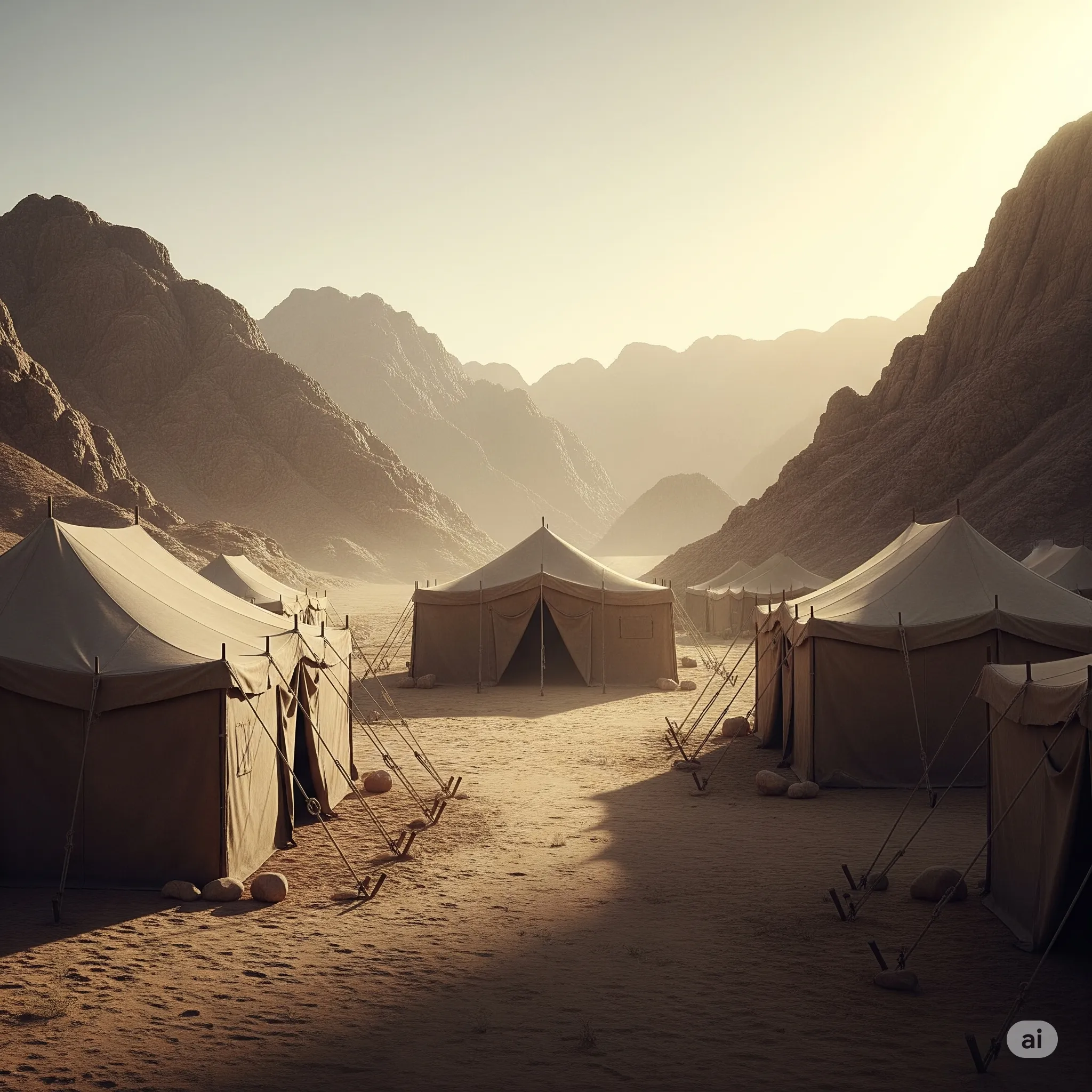
by Yousuf Jehangir
I woke up for Fajr to the sound of the Imam’s booming yet harmonious voice calling out the Adhan. The early morning air was crisp and cool, gently filling my room as I rose from my bed. After performing wudu, I made my way toward the masjid, the narrow streets illuminated by the soft glow of lanterns. As I arrived at the masjid, a familiar voice greeted me. “Assalam u alaikum, Ilyas,” Sulieman said warmly. “Walaikum assalam,” I replied, clasping his shoulder in greeting. “How are you?” “I’m good, Alhamdulillah,” he said. “And you?” “Alhamdulillah, I’m well,” I answered, a smile pulling at my lips. Suddenly, a figure approached us, his expression serious. “Ilyas,” he said breathlessly. “Ziyad ibn Ahmed is about five miles out of the Valley of the Falcon.” “Thank you,” I replied, nodding. Without another word, he turned and hurried off. After praying Fajr, the dawn giving way to a warm, golden light, Sulieman and I mounted our horses. Their hooves clattered softly against the rocky path as we rode toward the river crossing. Mist hung in the air over the water, and the calls of distant birds echoed in the quiet morning. When we reached the crossing, we saw Ziyad ibn Ahmed waiting. His tall figure stood firmly by the water, his armour glinting faintly in the soft light. Upon seeing us, Ziyad raised his hand. “Soldiers of Yousuf ibn Muhammed, come and meet us here!” We urged our horses into a canter, the rhythmic sound of hooves pounding against the earth as we approached. Dismounting, we greeted him. “Assalam u alaikum,” we said. “Walaikum assalam,” Ziyad replied, his piercing gaze scanning us. “Where is Yousuf ibn Muhammed?” I hesitated for a moment before speaking. “Abee is gone,” I said quietly. “He travelled to Seville to gather volunteers. Before he left, I had a dream that he wouldn’t return. I begged him to let me go with him, but he said I couldn’t. He told me that if he didn’t return within two months, we would have to assume he was dead, and his son would take control.” Ziyad raised an eyebrow. “How long has it been?” “It’s been three months,” I said sombrely. “So his son has assumed control.” Ziyad’s eyes narrowed. “Who is his son?” I stood tall, my shoulders squared as I met his gaze with quiet resolve. “I am his son.” After a brief silence, I added, “Let us discuss this at our base if that is fine with you.” Ziyad nodded. “Lead the way.” We rode swiftly back to the camp, the valley stretching before us. As we entered, the commander of the reserve division rushed to me with urgency in his eyes. “My lord,” he said quickly. “The Christians are preparing for an attack. We must prepare immediately. That evening, under the flickering light of torches, I gathered my council. Ziyad, Sulieman, and the commanders all sat in a tight circle. “We will use the land Allah has blessed us with to our advantage,” I began, drawing from the Prophet Muhammad’s tactics at the Battle of the Trench. “We’ll dig trenches at the valley’s entrance to halt their advance and force them into narrow paths where their numbers will be useless.” The camp became a full of activity. People worked tirelessly, digging trenches and setting obstacles in place. Scouts were sent to monitor the enemy, and emissaries journeyed to neighboring tribes seeking reinforcements. Days later, the enemy forces appeared on the horizon. From my vantage point, I saw confusion spread across their ranks as they encountered the trench. Their soldiers hesitated, staring at the obstruction before them, unsure of how to proceed. “Archers!” I commanded. The air was filled with the whistling sound of arrows as they rained down on the enemy. Cries of pain and confusion erupted from their ranks, and their formation began to falter. The frustration in their movements was evident. For days, we carried out hit-and-run tactics, wearing down their morale. When the time came, their forces attempted to charge, but we had anticipated this. The narrow paths we’d fortified forced them into tight formations, unable to maneuver. “Charge!” I shouted. Our cavalry surged forward from all sides, surrounding their forces and cutting off their retreat. “Surrender, or we will have no choice but to kill you!” I shouted over the clamor. “Never!” came the defiant reply. “Allahu Akbar!” I cried, signalling my forces to charge. The clash of swords and shields rang in my ears as we fought fiercely. After about half an hour of intense combat, I saw a white flag emerging from the enemy commander’s tent. “Stop!” I shouted, raising my hand. My army halted, their weapons raised but still. The enemy forces were taken prisoner, and I immediately gave orders for them to be treated with dignity. We provided food, water, and medical aid, following the example of the Prophet Muhammad ﷺ in dealing with prisoners. “Treat them kindly,” I reminded my men. “For Allah loves those who are merciful.”
Read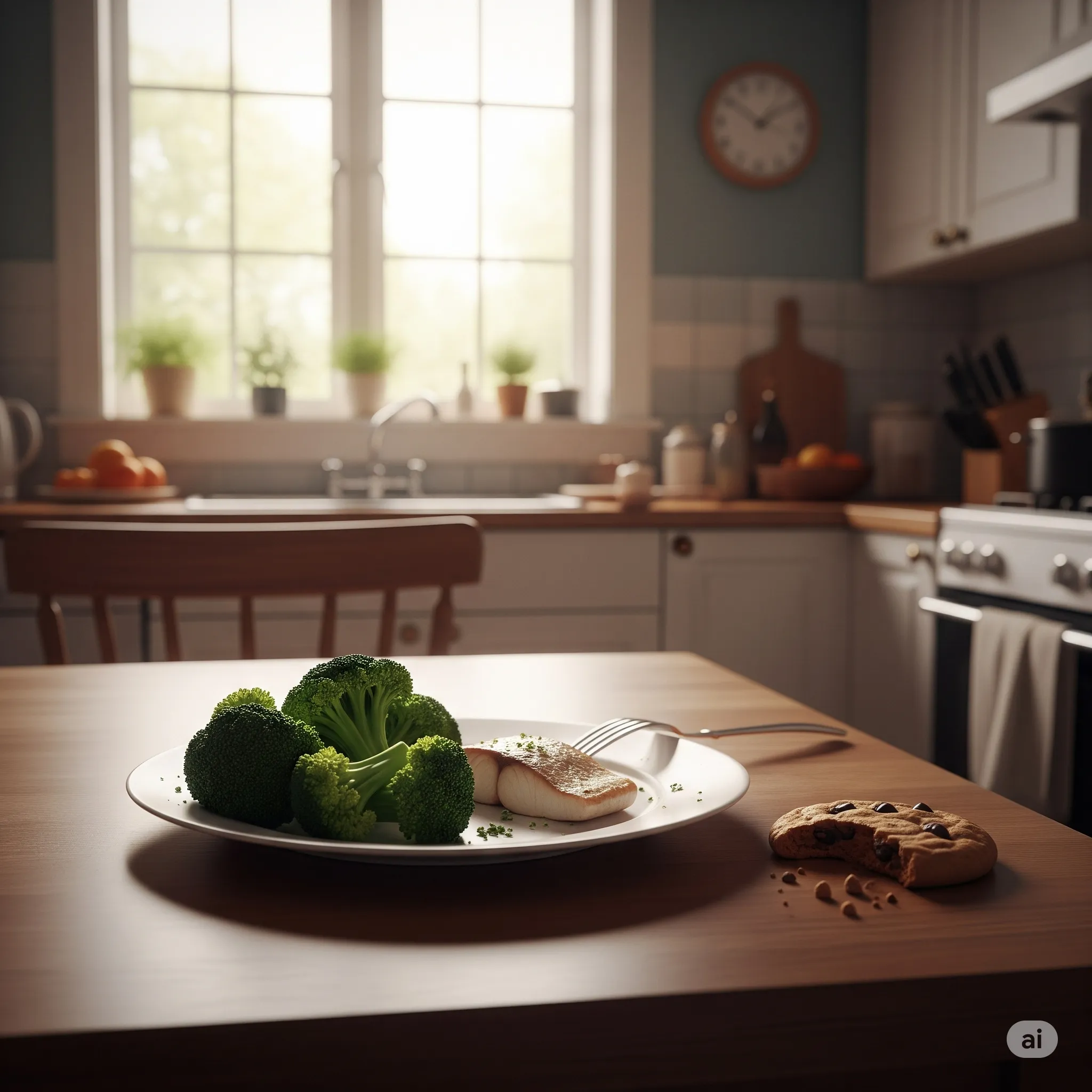
by Huda Hibatullah
One day, Sara woke up with a big idea. She was going to bake cookies and share them with her sister. It sounded like the perfect thing to do! But there was one rule—her mom said she could have a cookie only after lunch. Lunch was rice, broccoli, and fish. Sara didn’t like fish, and she definitely didn’t like broccoli. She made a face just thinking about it. Her little sister, Lily, though, loved both of them. Sara couldn’t understand how Lily could enjoy eating them. They went downstairs, and their mom served the food with a big smile. Sara stared at her plate and poked at the food with her fork. She wasn’t excited about this lunch at all. She sighed. How could she get out of eating it? As she looked around the kitchen, Sara noticed the window was open. That gave her an idea. What if she just threw the broccoli and fish out the window? Then, she wouldn’t have to eat them, and her mom would never know! It seemed like a perfect plan. Without thinking twice, Sara carefully pushed the broccoli and fish off her plate and onto the floor. With a quick glance to make sure no one was watching; she tossed the food out the window. She smiled to herself, proud of her cleverness. The food was now far away, and she wouldn’t have to eat it! But just as she was feeling proud, she heard Lily’s voice. “What did you just do?” Lily asked, staring at Sara with wide eyes. Sara froze. She didn’t want Lily to tell their mom. “Please don’t tell Mum!” Sara begged, her voice small. “I’ll do anything. You can have my cookie later, I swear!” Lily crossed her arms and looked at Sara with a smirk. “Fine, but you owe me one. Big time.” Sara breathed a sigh of relief. “Thanks!” she whispered, feeling lucky that Lily had agreed to keep quiet. She quickly finished the rice on her plate, hoping her mom wouldn’t notice anything. “I’m done!” Sara said, trying to sound casual. She grabbed one of the cookies she’d baked earlier and rushed to her room. But once she was in her room, nibbling on the cookie, she started to feel a little guilty. The cookie tasted sweet, but something inside her didn’t feel right. She had lied to her mom and thrown food out the window without asking. It was just a little thing, but it still felt wrong. What if her mom found out? Or what if Lily decided to tell on her? The more Sara thought about it, the worse she felt. The cookie didn’t taste so good anymore. It was like the guilt had made the sweetness disappear. Just then, there was a knock on her door. It was Lily. “You know,” Lily said, leaning against the doorframe, “you really owe me now. What are you going to do for me?” Sara looked at her sister, and the guilt grew stronger. She couldn’t just let this slide. “Lily, I think I need to tell Mum,” Sara said quietly. Lily looked surprised. “Tell her what?” Sara sighed. “Tell her what I did. I don’t want to keep this secret anymore.” Lily stared at her for a second, and then, surprisingly, she shrugged. “Okay, I guess that’s the right thing to do. But you still owe me!” Sara smiled weakly at her sister. “I know. I’ll make it up to you.” Taking a deep breath, Sara walked down the stairs to the kitchen. Her mom was busy cleaning up, and Sara felt her heart pounding in her chest. She didn’t know what her mom would say, but she knew she had to do this. She had to be honest. “Mum,” Sara said, her voice trembling, “I have to tell you something.” Her mom turned around, wiping her hands on a towel. “What’s going on, sweetie?” Sara took a deep breath. “I didn’t eat the fish or broccoli. I threw them out the window.” Her mom didn’t say anything at first. Sara looked down at the floor, waiting for her mom to get mad. But after a moment, her mom spoke softly. “Why didn’t you just tell me you didn’t like it?” her mom asked. Sara mumbled, “I didn’t want to upset you. I thought you’d be mad.” Her mom smiled gently and walked over to her. “Sweetheart, I would have been disappointed if you lied to me. But I’m proud of you for telling me the truth. Being honest is more important than keeping secrets. I’m glad you came to me.” Sara felt a huge wave of relief. She was scared her mom would be really upset, but instead, she felt like a weight had been lifted off her shoulders. Being honest wasn’t so bad after all. And her mom wasn’t mad—she was proud. From the doorway, Lily said, “You did the right thing, Sara.” Narrated `Abdullah: The Prophet ﷺ said, “Truthfulness leads to righteousness, and righteousness leads to Paradise. And a man keeps on telling the truth until he becomes a truthful person. Falsehood leads to Al-Fajur (i.e. wickedness, evil-doing), and Al-Fajur (wickedness) leads to the (Hell) Fire, and a man may keep on telling lies till he is written before Allah, a liar.”
Read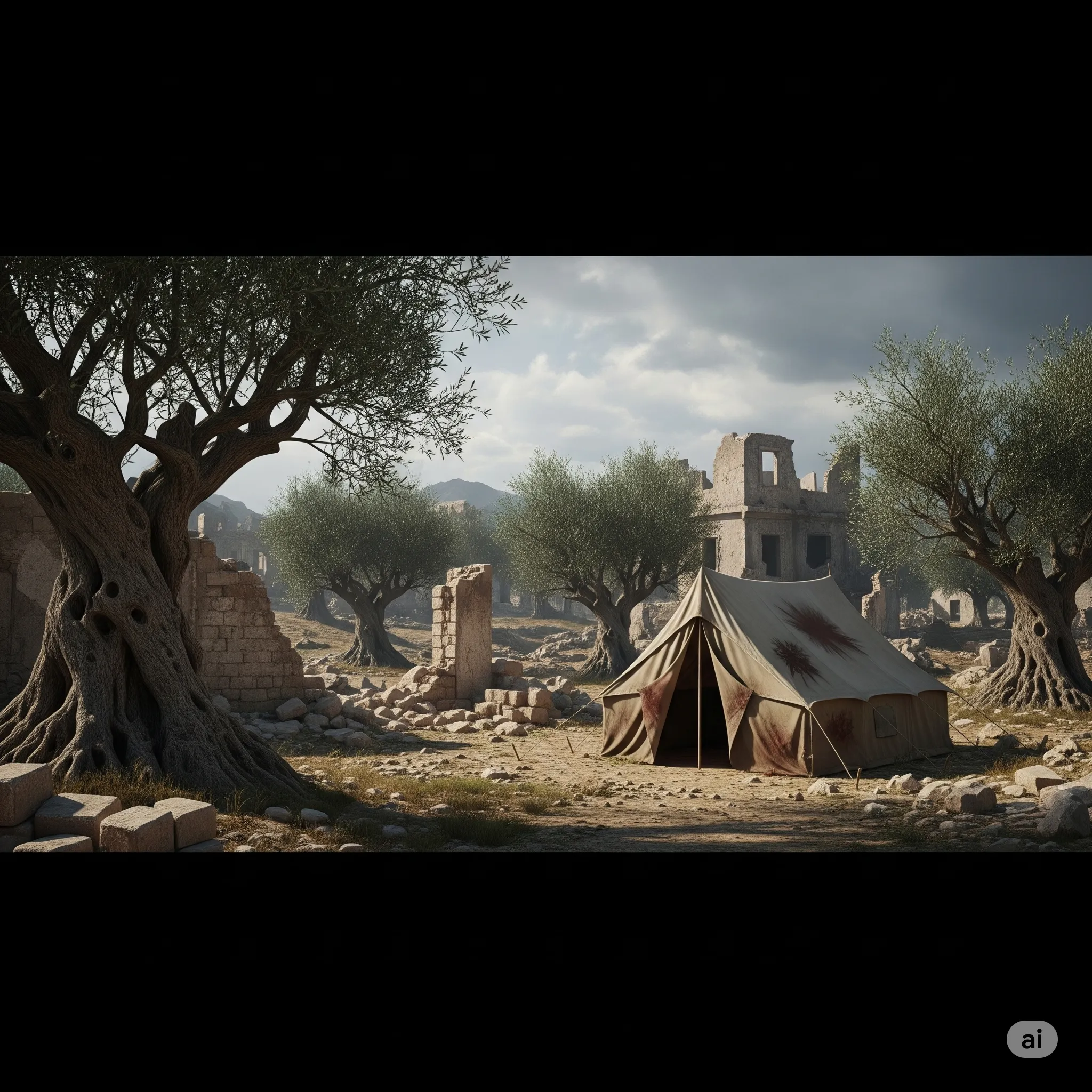
by Rayhana Al-Ghourani
In a land where ancient olive trees whisper secrets of the past, my name is Soraya, and I am twelve years old. This sacred soil has been my home, but for over a year, our lives have been shadowed by the spectre of war. Our struggle for freedom is etched into the very stones, a battle spanning over eighty years, filled with tales of resilience and hope. It all started at dawn, one year ago. “Soraya, wake up! It is Fajr.” It was mama. She always wakes me up for Fajr at exactly 5:30 am. I got up from bed, went to the bathroom, made wudu and came out to pray. When I finished, I sat down on my prayer mat to read Quran and do dhikr to Allah (SWT). After that, I also made my daily dua: “Oh Allah, I am calling upon you, by your beautiful names, and your exalted attributes, which fill the heavens and the Earth, and which are known and unknown to us, to make me among those who are guided to the straight path, and to make me among those who are blessed with your mercy and forgiveness. Ameen.” Then I went back to bed I went since I had school in the morning. I was a lucky girl, Alhamdulillah. Going to school and having access to shelter is a big privilege in my country. What I didn’t know back then that my life was going to change in exactly half an hour……. BOOM! “SORAYA! WAKE UP!” BANG!! I was very confused. For some reason, there were falling buildings and rubble on the road. I looked up at my mum and saw worry lines all across her face. “Quick! Put on your hijab and come outside.” I noticed her voice was filled with worry. This is so weird. What was going on, and why was my mum so nervous? Even though I was really shaken, I put on my scarf in a hurry and ran down the stairs out of the building. Outside, I found destruction everywhere. There was no place safe from the sudden bombs. When I finally found my family, I ran towards them and hugged my two younger sisters tightly. “Soraya!” I turned to see who was speaking. It was my dad. And what he said to me were the last words that I heard coming from his mouth. “My daughter, please remember what I am about to tell you,” he urged me. I nodded, and Baba continued, “The Prophet ﷺ said: ‘A group of my nation will continue to be victorious upon the religion, overpowering their enemies. None who oppose them will harm them, except what afflicts them of difficult circumstances, until Allah brings his command while they are like so.’ The land of Palestine is a blessed land, and Allah will bless those who are patient and steadfast upon it.’ So you see, Soraya, be patient, no matter what happens, and Allah will reward you. Never forget that wherever you are, Allah is with you. And only He can bless you. Be sure to take care of your sisters if anything happens to us, by the will of Allah.” I promised my father I will do everything that he asked of me, and I will follow in our Prophet’s footsteps. Allah decided to take my parents back on that day. CRASH! The bomb fell, and I held my sisters tight as we ducked behind some boulders. After the dust cleared, I peeked behind our hiding place and saw two lifeless bodies on the floor. One a man with fluffy brown hair, and the other a woman with a thin flower scarf wrapped around her head. My eyes filled with tears at the sight of my parents. I huddled my sisters tight, and we cried into each other’s shoulders. In the present… I had become my sister’s new mother, comforting them when they were sad, and trying to feed them crumbs that I find around us. And during all that I kept repeating the words of my dad before he died, just like he wanted me to. Living in a tent was harder than anyone ever knew. It was not like outdoor camping. Whenever it rained, the dirt ground got all muddy and sticky. But I stayed patient. There were no separate rooms, so when I want to do some revision from school, my sisters would entertain each other loudly. I stayed cool and went outside. When I thought about the pain that I was feeling inside me from the loss, I was persistent and knew that Allah will guide this beautiful land to peace. I never thought why I was the one to suffer, why I was the one to lose everything. Because I am not the only one. There are millions of children who are lonely. I am sure, that if I keep following in Prophet Muhammad’s ﷺ footsteps, and I stay on the straight path, Allah will bless me and everybody who has suffered in our Land of the Prophets. Living in a house made of cloth is hard, especially with two younger sisters, but Allah is with me. The End
Read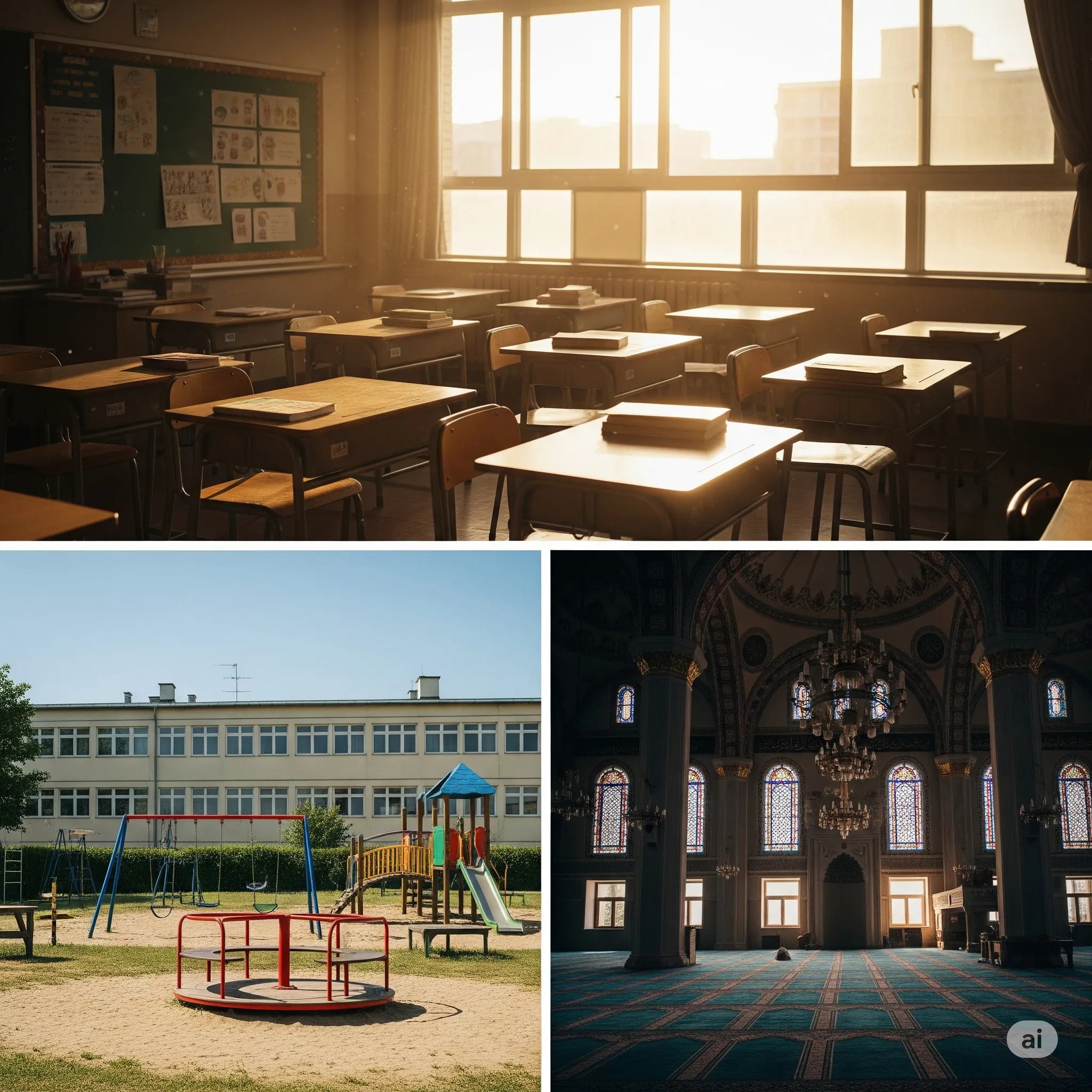
by Ishaal Jadoon
Ahmed sat quietly in the corner of the classroom, staring out of the window at the bright afternoon sun. The other boys were loud, laughing and shouting, playing football during recess. But for Ahmed, the noise was unbearable, a constant reminder of how different he felt from the others. Every day was the same. As soon as school began, he would dread the moment the bell rang, signalling the start of class. It wasn’t the lessons that bothered him. It was the bullies—Amin and his friends. They were always there, always ready to make his life miserable. “Hey, Ahmed!” Amin would shout, a sneer on his face. “Why are you so quiet, huh? Got no friends?” The taunts never ended. His words cut deep, and though Ahmed tried his best to ignore them, it was hard to not feel worthless. Today, as usual, Amin shoved Ahmed’s lunch bag to the floor, scattering his food everywhere. The laughter that followed stung more than any of the physical pain. Ahmed bent down, trying to gather the remains of his lunch, his face burning with embarrassment. He wished he could disappear. The bell rang, signalling the end of recess, and the class filed back in. But Ahmed could barely concentrate. All he could think about was the way Amin and his friends had humiliated him once again. He was tired—tired of the teasing, tired of the bullying, tired of feeling helpless. That Friday, after a long week of school, Ahmed headed to the mosque with his father for Jumu’ah. At Friday prayer, the mosque was a place of peace for him, where he could escape the harsh realities of school and the cruelty of his classmates. His father, a kind and gentle man, always reminded him to be patient, to keep his heart soft, and to remember the teachings of Prophet Muhammad ﷺ . When they arrived, the mosque was filled with worshippers. Ahmed sat quietly next to his father, listening as the Imam, a wise and compassionate sheikh, began his sermon. “Dear brothers and sisters,” the Imam began, his voice calm yet powerful, “today I want to remind you of the teachings of our beloved Prophet Muhammad ﷺ , who taught us the importance of kindness, patience, and forgiveness. The Prophet ﷺ, despite facing unimaginable hardships, never sought revenge, never responded to hatred with hatred.” Ahmed listened closely, feeling a sense of comfort wash over him. The Imam continued, “One of the greatest lessons we can learn from the Prophet ﷺ is that when we are wronged, we must not seek revenge. Instead, we must show kindness. For we never know what someone else might be going through. Their actions may come from pain, from struggles that are hidden from our eyes.” The Imam’s words struck Ahmed like a bolt of lightning. He thought of Amin and his friends. All these years of bullying, all the torment and the pain—they had been eating away at him. He had often dreamed of standing up to Amin, of getting back at him, making him feel the same hurt that Ahmed felt every day. But what if, as the Imam had said, there was more to Amin’s behavior than Ahmed realized? What if there was a reason behind it? Ahmed’s thoughts were interrupted by the Imam’s concluding words. “We must remember the example of the Prophet ﷺ when he was mistreated. He did not lash out, but instead, he responded with mercy, compassion, and kindness. And in doing so, he changed the hearts of even his harshest enemies.” The rest of the prayer passed by in a blur for Ahmed. He couldn’t stop thinking about the Imam’s sermon. His heart felt lighter, as if a weight had been lifted. He realized that perhaps it was time to stop trying to fight fire with fire. Maybe the answer wasn’t to retaliate, but to show kindness—just as the Prophet Muhammad ﷺ had done. The next day at school, Ahmed faced Amin again. As usual, Amin sneered at him from across the room. He made a sarcastic remark, trying to make Ahmed feel small. But this time, Ahmed didn’t react. He simply looked at Amin with a calm expression and said, “I’m sorry if I’ve done something to upset you. I don’t want any trouble.” Amin stared at him, confused. This wasn’t the response he had been expecting. The other boys in the class looked on, surprised by Ahmed’s unexpected calmness. For a moment, there was silence. “What are you talking about?” Amin finally muttered, still scowling. But there was something in his voice that was different. It wasn’t the usual mocking tone. “I just want to be kind,” Ahmed replied, his voice steady but gentle. “I don’t know what you’re going through, but I want to be a good person.” Amin didn’t say anything for a while, and the moment passed. The bell rang, signalling the end of class, and the students filed out to the playground. But as Ahmed was about to leave, he felt a tap on his shoulder. He turned around to find Amin standing there, looking uncomfortable. “Hey, Ahmed,” Amin said quietly. “I… I wanted to apologize. I know I’ve been a jerk. I’ve been going through some stuff at home, and I took it out on you. I didn’t mean to make you feel bad.” Ahmed blinked, surprised by Amin’s words. He had never expected this. “It’s okay,” he said softly. “I understand.” Amin hesitated for a moment, then added, “Maybe we could, you know, talk sometime? I don’t want to keep being like this.” Ahmed smiled, feeling a warmth in his chest. “Sure, I’d like that.” *** Over the next few weeks, something incredible happened. Ahmed and Amin started talking more. They would sit together at lunch, share stories, and laugh about things that had nothing to do with school or bullying. Ahmed learned that Amin had been facing challenges at home—his parents were going through a difficult divorce, and Amin felt lost and angry. The bullying had been his way of coping with the pain. As they grew closer, Ahmed realized that the kindness he had shown to Amin had not only changed the course of his relationship with his former bully, but it had also changed him. He felt a sense of peace he had never known before, a peace that came from understanding and empathy. He had followed the Prophet Muhammad’s ﷺ example, and in doing so, he had not only healed a broken relationship but also healed his own heart. By the end of the school year, Ahmed and Amin had become best friends. They would talk about everything—about their dreams, their fears, and even their faith. Amin, who had once been the source of Ahmed’s pain, had become a source of support and friendship. At the mosque, as they stood side by side for the Jumu’ah prayer, Ahmed couldn’t help but reflect on how far he had come. He had followed the teachings of the Prophet Muhammad ﷺ —to show kindness, to forgive, and to understand that everyone is fighting their own battle. In doing so, he had not only found a friend but had also learned one of life’s greatest lessons: that true strength lies not in seeking revenge, but in showing compassion. And so, as Ahmed and Amin left the mosque together, walking in the footsteps of the Prophet Muhammad ﷺ , they knew they had found something far more valuable than victory over their enemies—true friendship, born from kindness and understanding.
Read
by Nazeeha Protikkha
It had been three years since Maryam was diagnosed with clinical depression, but to her it felt like centuries. Maryam hated taking medication and refused to notice improvement as she simply stated that, “Nothing works, there’s no cure.” Maryam’s depression made her feel completely hopeless at times which would cause anger to fume into her brain. She unfortunately let out her temper on her family and friends constantly as if they were the reason for her horrible mood. Maryam’s behaviour disappointed her parents as they believed deep inside she was a soft, kindhearted girl who respects everyone. Maryam gradually noticed that her true self was fading. Maryam had a rough day at school where she bottled up her emotions and refused to speak to anyone. She felt frustrated and angry and on her way home, only wanting to eat something that satisfied her cravings. She sometimes believed that only writing in her diary and good food could ease her stress and give her some comfort. As she stormed into her house, she began yelling, finally releasing her emotions. “Amma!” Maryam called to her mum. There was no answer so she called several times, each call getting louder each time. Maryam grew extremely impatient as her mum wasn’t responding. She furiously stomped her way to her mum’s room. “Why weren’t you answering me?” she yelled. “Maryam I was on the phone with my boss. It was urgent. I’m sorry,” her mum said apologetically. “Well, you should’ve come right after you put your phone down! What’s wrong with you?” she said harshly. Her mum had disappointment pasted on her face. She felt upset knowing that Maryam is getting angry for the smallest reasons. “Well, what did you want, is there something I can help you with?” her mum asked kindly, not raising her voice. “I want food, and not the food in the fridge from yesterday, I want good food, food that tastes nice,” Maryam said angrily. “There’s plenty of food in the fridge, why don’t you finish those first?” her mum suggested. “No!” Maryam yelled, “Urgh!” Maryam’s mum cooked another meal, trying her best to fulfill Maryam’s requirements. After a while, she cooked some chicken curry that she knew Maryam loved as a kid. However, Maryam rudely refused to eat the food and said she just wasn’t going to eat for the rest of the day. Maryam’s mum exhaled, “There’s food in the fridge if you change your mind,” she said as Maryam slammed her door and disappeared into her room. After some time, Maryam wept in her room, tears streaming down her face. “Why doesn’t anyone understand me, Diary?” she wrote down in her precious diary that she kept confiding in through the entire year. She then wrote, “Why don’t I feel like myself anymore?” She refused to let anyone comfort her as she was always mad at her family. Suddenly, her younger brother Ibrahim stepped into her room with a bowl of fruit. “Has anyone ever taught you to knock?” Maryam stormed, wiping her tears. “Sorry, Amma just wants you to eat,” Ibrahim said, giving the bowl to Maryam. “I don’t want this!” Maryam yelled, but her brother was already out of her room. She started to cry again, feeling horrible inside. As much as she acted all rude and annoyed, there was always a hint of guilt that creeped up her skin. Something that told her she could change. *** A few months later, as Maryam came back from high school, she noticed that the house seemed extremely, unusually quiet, she could only hear hoarse coughing from her parents’ room. She dropped her bag and ran to the room. Ibrahim was holding their mum’s hand, quivering while kneeling down next to the bed she was lying in. Her mum looked so weak and fragile, her eyes small, her skin pale. Maryam has never seen her in this condition before. “Amma?” she whispered. Her mum, despite the pain she was going through, smiled. Maryam noticed the fatigue in her expression and wondered how she was able to find the strength to smile so cheerfully. Her mum reached her hand to Maryam and spoke in a hoarse voice, “Maryam, you are a beautiful, kind, young girl, you always face-” she coughs, “challenges by yourself.” Tears welled up in Maryam’s eyes. “Amma, what’s happening?” she asked, crying. She only smiled and replied, “Make dua for me, and remember, be patient, don’t be angry, everything happens for a reason.” Maryam’s tears felt endless. They kept streaming down her face. Those were her mum’s last words before she passed away. *** A few weeks after Maryam’s mum’s passing, Maryam decided to study the Quran and learn the teachings of prophet Muhammad. In Ayat 3:134 in the Quran she learnt that “who spend in the way of Allah both in plenty and hardship, who restrain their anger, and forgive others. Allah loves such good doers.” These words gave her strong motivation and inspiration to strive to follow Allah’s ways. Additionally, she had written her mother’s last words on a piece of paper and had stuck it on a mirror so she could take her advice. Every day when she was getting ready, she noticed the paper and reminded herself to control her temper. She learnt that her mother was right about controlling her anger. It made her life so much more peaceful and felt bearable. “Abba!” She called her dad. Since there was no answer, she patiently waited a few seconds and got a response, “Yes, Maryam?” “Abba, can I help you with the cooking today?” she asked, smiling. Her father’s face lit up with joy and he agreed instantly. Maryam also engaged with her little brother more, they played board games together and laughed about hilarious tv shows. “Apu, you’ve changed,” Ibrahim said one day. “Good change or bad change?” Maryam asked, smiling. “Good, really good,” he said. Maryam smiled, and for the first time in a long time, she started to feel a spark of happiness. She felt like who she was again, the person her mum would want to see, the person she wanted to be, the person she wasmeantto be all along. *** One day, Maryam went to the therapist for her fortnightly check-in. “Maryam, how’s everything going?” her therapist asked. “Good, really good, I finally found peace,” she replied with confidence. Conversations with her therapist used to be frustrating and meaningless to Maryam, but now everything felt like it had a purpose. Just like her mum had said before passing, everything has a reason, and managing your anger can open up new things in your life—it can make you have a stronger connection to Allah and make you a happier, better person. Maryam finally found herself.
Read
by Eraj Jehangir
“As-Salamu Alaikum!” Imam Abu Jarrah’s voice echoed through the mosque, and my heart skipped a beat. I stood in the same spot where generations before me had prayed, thinking about our history, our struggles, and the sacrifices made by those who walked this earth before us. For a moment, the weight of it all hit me—the legacy of our faith and the responsibility we carry. “Ya Allah, help us in our time of need. Place someone in our ranks who is obedient to You, Ya Rahman,” I whispered, pouring my heart into the dua. My words felt so small, yet they hung in the air, a silent plea for a better future. And just as I thought the moment would pass, the Imam’s voice broke the stillness, and I knew something big was about to happen. “UMAR BIN ABDUL AZIZ!” The name hit me like a wave. I couldn’t believe it. My hands suddenly felt cold, and my breath caught in my chest. Could it be him? The man whose name had become a whisper in the streets. Hope for change, for something better, something more just. Could this be the leader we’d all been waiting for? I had heard the stories—the rumours—of a ruler who would return the Ummah to the path of righteousness, who would bring true justice and fairness. Umar bin Abdul Aziz wasn’t just a name; he was the symbol of a future where our faith was honored, our people were treated with respect, and the truth would shine once again. I couldn’t wait to see him. In my dreams, I had met him countless times, had long conversations with him, but seeing him in person? That would be something else. Tall, broad-shouldered, and with a face that glowed with noor. His clothes were a little crumpled, damp from the rain, and his hair was a bit messy—but none of that mattered. There was something in the way he walked, something in the way he held himself, that made you realize: this man was different. He didn’t speak of power or wealth. No, he spoke of Emaan, of trusting Allah (SWT) in every moment, especially when things seemed the hardest. As he spoke, I couldn’t help but think of the Prophet ﷺ in times of darkness. Umar bin Abdul Aziz, in his own time, was like a light shining in the midst of our struggles, calling us back to the true teachings of Islam. As the speech ended, an elderly man sitting next to me whispered, his voice full of emotion, “I never thought I’d see a time like this. This man—he is the change we’ve been waiting for.” I turned to him, my heart full of doubt and hope mixed together. “Do you think he can do it?” I asked quietly. The elder smiled, his eyes shining with something I hadn’t seen in a long time—hope. “If anyone can, it’s him. Umar bin Abdul Aziz is a man of strong faith and honesty. Just seeing him here reminds us that the right path is still open, no matter how lost we’ve become.” I wanted to believe him. I really did. Buthowwould he change things? Could one man really bring about the reform we so desperately needed? A Few Years Later It was happening. What we had all prayed for, hoped for—it was unfolding right before our eyes. Umar bin Abdul Aziz wasn’t just talking about change; he was making it happen. The Umayyad Caliphate, once full of luxury for the rich and misery for the poor, was transforming. There was a fairness in the air. The wealthy no longer lived in opulence while the poor suffered in silence. People who had once felt invisible were suddenly seen. I remember one evening in the mosque in Damascus when Umar spoke about Emaan once again. This time, his words struck deeper than ever before. “True faith is shown in difficult times,” he said. “Our Emaan is tested in our struggles, not in times of ease.” His words hit me hard. I had always been comfortable in my little bubble, never really facing a challenge that tested my faith. But what about the people suffering around me? What about those who had nothing but their trust in Allah? What did my faith really mean if I couldn’t stand firm through hardship? That evening, as I walked through the streets, I overheard a conversation between two scholars. The word Hadith stood out, and I couldn’t help but slow my pace. “You know,” one scholar said, “Umar bin Abdul Aziz is overseeing the collection of Hadith himself. He’s making sure that only the most authentic ones are preserved.” I stopped in my tracks. Umar bin Abdul Aziz—I had heard of his political reforms, of how he was working for justice, but I hadn’t known about this. He wasn’t just concerned with worldly matters—he was making sure that the core of our faith, the teachings of the Prophet ﷺ , were preserved accurately, without distortion. This man wasn’t just leading the empire; he was safeguarding the very foundation of our faith. The second scholar nodded in agreement. “He knows that without the authentic Hadiths, we can’t properly follow the Sunnah of the Prophet ﷺ . With all the false reports spreading, it’s crucial to ensure we have only the truth.” I stood there, stunned. It wasn’t just about changing laws or creating fairness—Umar was ensuring that our connection to the Prophet ﷺ remained pure. He was restoring the core of our faith, protecting it from the distortions of time. I walked away from the conversation with a new understanding. Umar bin Abdul Aziz wasn’t just a leader in the traditional sense—he was a guide, a protector of our faith. He understood that true reform didn’t just happen on the surface; it happened from within, at the very heart of who we were as a people I realized something that night: the real change we needed wasn’t just political or social—it was spiritual. And Umar bin Abdul Aziz was showing us the way. He was leading by example, not just in how he governed, but in how he preserved the teachings of Islam. He wasn’t just a ruler; he was a light, guiding us back to the essence of our faith. And in that moment, I knew my role, too. I had to do my part—by holding on to the truth, by living with integrity, and by protecting what was pure in our faith. I wasn’t just a passive observer anymore. I had a responsibility—just like Umar. To lead with truth, with honesty, and to always strive to be the person Allah (SWT) wants me to be.
Read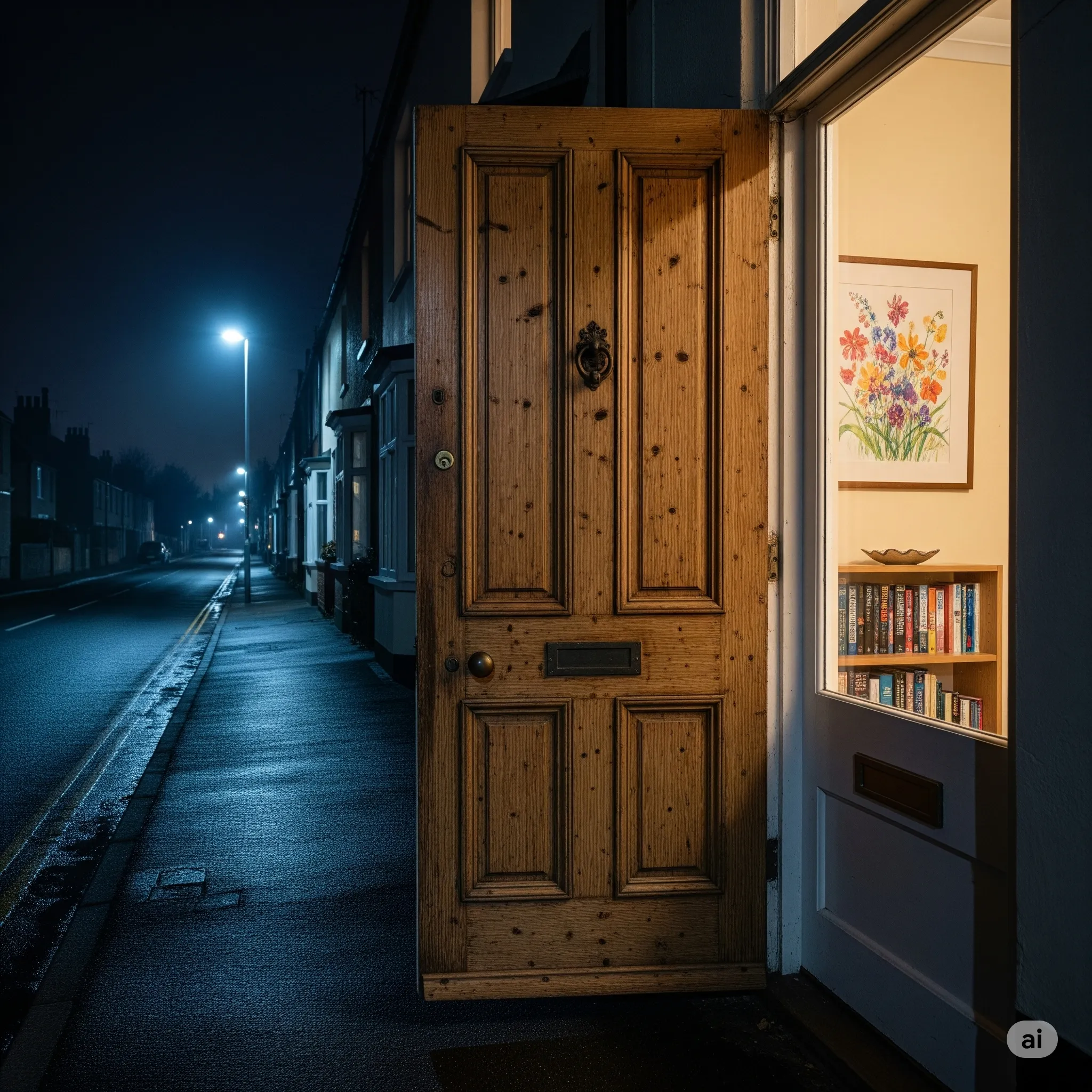
by Sophia Chalak
As the wind blew harshly on Asya’s small frame, she shivered once more. Her nose, of which she inherited from her mother, was turning a slight tinge of red. She sniffled, silently wishing she had taken her mother’s advice. Asya knew she should have listened to her Mama when she told her to take a jacket, or even a packet of tissues. But she was already out the door, promising to be home before dinner. Now, she suffered the bitter consequences and was left to walk in this insufferable cold. As she trudged, step by step, Asya thought about how she often got herself in these situations. She was a responsible girl.At least that’s what my teachers say. I mean I’ve never been in a school fight, I do well in my exams. And I’m even on the Student Council Team, she thought to herself. She sighed in defeat. Asya knew exactly how she got herself in this situation, and the very thought of it made her stomach churn. As she turned into the now quiet street, a stark contrast to the hustle and bustle during the day, her house came into view. It was a modest house, enough for her family. The living room light was on, and the faint smell of dinner wafted through the air. Mama looked to be pacing the room, probably uttering any dua her mind could think of. Her baba was sitting on his worn-out armchair, tapping his foot impatiently against the floor, a trait he had since Asya was a little girl. As she approached the old wooden door and intricate doorknob, she paused. Asya had no excuse for coming home past dinner. At least in her mind, she couldn’t tell her parents the actual reason why she was late. They’d think of her as a weak person, as someone who couldn’t stand up for herself, and Asya cared a lot about what people thought of her—especially her parents. She bit her lip, and knocked three times, each knock more timid than the last. As she stood, waiting for her parents to open the door, Asya took a deep breath and muttered a hopeful, Bismillah. Asya fiddled with the hem of her shirt, while trying to take in Baba’s words. It hurt, seeing them both so flustered, so confused. How did I go from the girl who used to carry her little teddy around with her everywhere? The girl who used to follow her parents around everywhere, insisting on copying their every action. The girl who used to be so brave, so outspoken, so herself!Asya stopped her thoughts before they threatened to bring tears to her eyes. She looked at her Baba, the eyes he shared with her, a haze of coffee brown with little green specks. Her Baba used to always say that the green specks in his eyes was Allah’s way of letting him take some of his land back to Australia. These specks were passed down to Asya and her older siblings as a way of connecting back to their roots. Their home. Lebanon. Whenever her siblings, Illyas and Zackariya would ask how he stayed so strong, Baba always replied with the same answer, and one Asya knew by heart. “Our Prophet Muhammed ﷺ said, ‘Anyone who trains to be patient, Allah will give them the strength to be patient. Nobody can be given a blessing better and greater than patience.’” Their family lived by this teaching, and as she drifted back to reality, she realised her parents had done so much for her and her siblings. “Me was worried. So worried. And know this, no trust. It’s finished,” her Baba spoke, his English as broken as his heart. His gaze was full of disappointment, a feeling Asya had become all too used to in the past few months. As her Baba leaned back in his armchair, and closed his eyes, she saw a single tear drop down his wrinkled cheek. Her Baba was … crying? The same Baba who escaped war and death? The same Baba who told her that with hardship comes ease. “My Baba,” she whispered, her voice cracking. And it was all her fault. As she stared at her Baba, now rubbing the back of her troubled mother, she wished she was still that little girl. The girl who used to dance in public, without a care in the world. But ever since she stepped into the teenage realm, that little girl was a mere memory. Nothing more. Now her life is full of what girls at school think of her. Is she wearing enough makeup? Is she skinny enough? Is she eating more than she should? Asya knew that this wasn’t the way she should be thinking, but no matter how hard she tried, she knew that there was no point in climbing back up. Why should she when she was already in so deep. Asya groaned for the hundredth time that night. Sleep had never taken longer to come. She made her wudu, read all her surahs, and said the dua of sleep. Twice. To make matters worse, her stomach was still churning from earlier today. She felt guilty for making her parents feel that way, especially after all they did for her. She decided a quick scroll on Instagram would take her mind off all the drama and chaos. As her eyes adjusted to the light on her phone, she scrolled and scrolled. Images of girls showing their “perfect meal plan” and videos of how to “perfectly apply blush and contour” popped up. Asya saved plenty in a folder named “One Day”. But as she continued scrolling, one particular image caught her attention. It wasn’t rare for Asya to get Islamic reminders every now and then. But it was what was written that made her eyes water. “Be kind, for when kindness becomes a part of something, it beautifies it.” She looked up to face her bland, cream wall. In the middle was a beautiful watercolour painting of wildflowers. Her mother had gifted it to her when she chose to wear the hijab earlier that year. She still remembers the happiness on her face. Both her brothers had given a big hug each. There smiles showed their pride. Her Baba and Mama were embracing each other, both feeling immense joy. Amongst the picturesque wildflowers was the same teaching Asya came across on her phone. Her mother had told her that she was the kindest girl she ever met, but that she should direct some of that kindness towards herself. Asya sat on her bed and contemplated what her mother said. Her mother was right. Asya always ran herself ragged trying to please everyone. Whether it be barely eating her dinner to look like the popular girls or buying the latest shoes to fit in at school, Asya always played the game of cat and mouse. And she was tired of being a mouse. It led to her having strained relationships with her family, and her family was Asya’s greatest gift from Allah. Earlier that day Asya checked her watch for the hundredth time that hour. It was 6:34 pm. Her family wouldn’t have started dinner without her, and they would have been worried sick. She turned to her friends, Maryam and Isra. She plastered her best smile, and said as confidently as she could, “Hey guys, I-I have to leave, it’s getting kinda dark. My parents are waiting for me a-at home,” Asya gulped. She knew her friends wouldn’t let her leave so soon. They still wanted to shop more, and they needed her. Maryam spoke first, her voice covered by an unusual sweetness. “Asya, you know we only just started. And well…” Maryam paused, nudging Isra to continue. “We kinda forgot our wallets at home, and you promised we could use some of your money to pay,” Isra batted her eyelashes and put on her best pout. Asya pushed down the sense of urgency to head home, and nodded, her face still plastered with the fake smile. She urged them to continue, promising she would be right behind them. Asya slowly got up from her bed and walked carefully, tiptoeing through her room. She stopped in front of her bookshelf, filled with books of all genres. Without any hesitation, she turned to a book she had been gifted earlier that year. She wiped the dust with her sleeve, then read the cover: The Nur of our Prophet ﷺ She took a deep breath, and turned the first page, embarking on a new chapter of her life, determined to follow in the footsteps of the Messenger of Allah, Prophet Muhammed ﷺ . The End
Read
by Maryam Danish
Hana let out a long breath as she set her pencil down. It was over. She looked around the classroom, noticing classmates packing their belongings or staring blankly at their papers. At sixteen, Hana thought she should have been better at handling the pressure, but this test had been unusually tough. Her inability to focus gnawed at her, and uncertainty churned in her stomach. Adjusting her hijab—a small, comforting routine—she whispered to herself, “You did your best.” but the words didn’t feel right. The bell rang, breaking her thoughts. Hana stood slowly, gathered her things, and caught her reflection in the mirror. Determined yet uncertain, she reminded herself she couldn’t change the past. Her phone buzzed with a message from her mom: “InshaAllah, everything will be fine. We’re proud of you.” Hana smiled, her mom’s words soothing her heart. She wasn’t alone. Walking through her busy neighborhood, Hana remembered her mother’s words: “Every challenge is an opportunity to grow closer to Allah.” Reflecting on the Prophet’s ﷺ perseverance, she felt connected to his struggles and inspired by his example. Hana reflected on the Prophet’s perseverance amid early persecution in Islam. Inspired by her mother’s lesson that challenges bring one closer to Allah, she found comfort in the Prophet’s patience and compassion during adversity. That evening, Hana’s father shared a story about the Prophet Muhammad’s ﷺ experience in Ta’if, where he faced rejection and abuse. Despite the hostility, lesson that challenges bring one closer to Allah, she found comfort in the Prophet’s patience and compassion during adversity. That evening, Hana’s father shared a story about the Prophet Muhammad’s ﷺ experience in Ta’if, where he faced rejection and abuse. Despite the hostility, the Prophet ﷺ prayed for the people’s guidance and forgiveness, showing unparalleled patience and kindness. “This,” her father said, “is how we should live—with patience and kindness, even in adversity.” The story lingered in Hana’s thoughts. She realized she had let her frustration over the test cloud her mind. Inspired by the Prophet’s ﷺ example, she resolved to trust Allah’s wisdom and face challenges with humility and grace. That night, during her prayers, Hana sought strength to embody the Prophet’s qualities of patience, kindness, and faith. The next day, though anxious about her test results, she felt at peace, trusting Allah’s plan and valuing her faith and character over grades Over the following days, Hana became more mindful, embodying the patience and kindness she admired in the Prophet ﷺ . Whether at school or home, she approached situations with perseverance and trust in Allah. She also started volunteering, finding joy in helping others, which deepened her sense of fulfillment. One afternoon, Hana noticed a classmate sitting alone on a bench, visibly upset. Though hesitant, she approached her. “Hey, are you okay?” she asked softly. The girl looked up, surprised, and admitted feeling overwhelmed. Hana smiled gently, sharing words of comfort rooted in her faith: “Remember, like the Prophet Muhammad ﷺ taught us, we don’t have to face tough times alone. Allah is always with us.” Her classmate nodded, visibly comforted. “Thank you, Hana. I needed to hear that.” As Hana walked home, she felt a quiet sense of fulfillment. She was learning to follow the Prophet’s ﷺ example—responding to challenges with patience, showing kindness, and trusting in Allah’s plan. Though the journey ahead wouldn’t always be easy, she knew that with faith and determination, she would never truly be lost. Later that week, Hana received her test results. While they weren’t as high as she’d hoped, they were better than she feared. Instead of dwelling on disappointment, Hana focused on what she could learn from the experience. She reminded herself that success wasn’t solely measured by scores but by the effort she put into everything she did. Hana’s parents praised her perseverance, reminding her that intentions matter most to Allah. Comforted by their words, she saw setbacks as opportunities for growth. Inspired by the Prophet’s ﷺ teachings, Hana continued finding ways to strengthen her faith and character. She spent more time reflecting, praying, and seeking guidance in the Qur’an. Each day brought its share of challenges, but Hana approached them with renewed strength and determination. Her teacher even noticed the change, complimenting Hana on her thoughtful participation in class. “You seem more confident lately,” the teacher remarked. “It’s inspiring to see how you handle things.” Hana smiled, realizing that the shift wasn’t just about her own efforts but about the guidance she sought from her faith. It reminded her of the Prophet’s ﷺ words: “The strong believer is better and more beloved to Allah than the weak believer, while there is good in both.” She knew strength came from faith, and she aspired to live by that principle. One evening, during a family discussion, Hana shared her thoughts. “I’ve realized that tests, whether in school or in life, are like reminders from Allah. They push us to grow and turn to Him for guidance.” Her father nodded, saying, “That’s true wisdom, Hana. Life will always have its challenges, but your faith will guide you through.” As weeks turned into months, Hana continued walking the path of perseverance and faith. She faced new tests and trials, but she no longer feared them. She embraced the lessons they brought, knowing they were opportunities to grow closer to Allah. Hana’s journey was far from over, but she carried with her a sense of peace and purpose. She was learning to walk in the footsteps of the Prophet Muhammad ﷺ —responding to life’s uncertainties with patience, kindness, and unwavering trust in Allah’s plan. Whatever lay ahead, Hana knew she would never truly be lost.
Read